
Chinese language and calligraphy classes
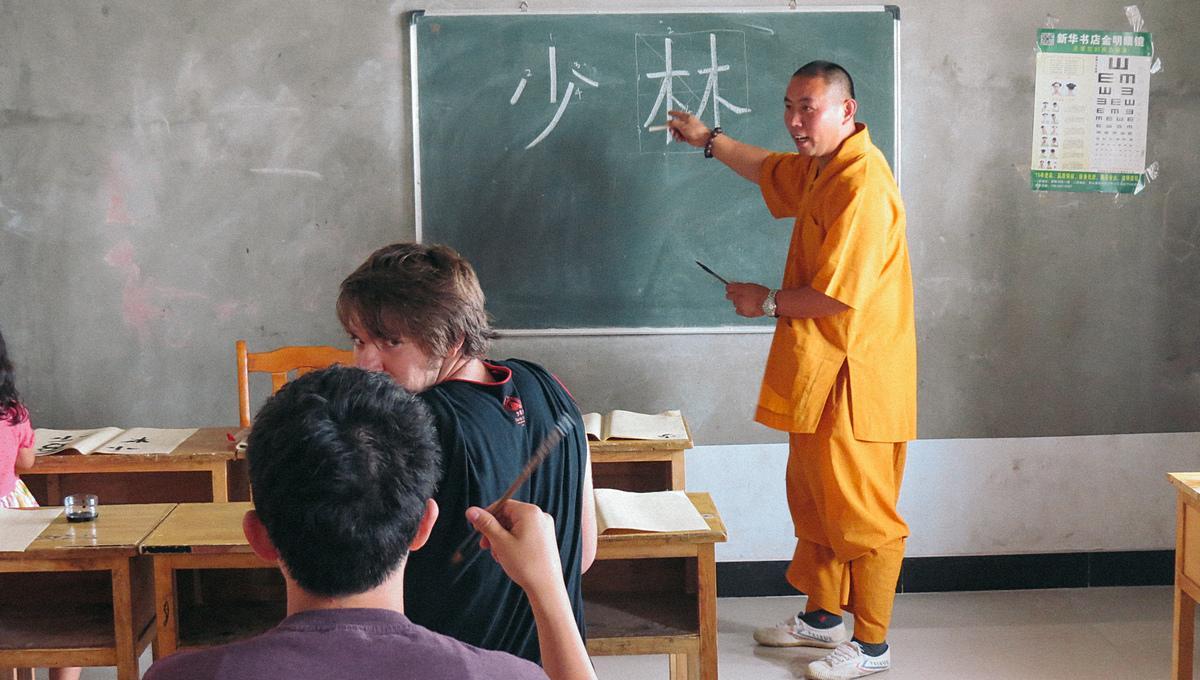
Traditional kung fu includes a set of practices, physical and spiritual. And there is no physical progress if the inner and outer do not develop together. Historically, the spiritual components of the Chinese martial arts include qigong, meditation, breathing practices, concentration exercises, calligraphy and language learning.
At any Shaolin Kung Fu school the opportunity to take Chinese lessons and practice calligraphy is included in the curriculum. Usually larger schools have this option for an additional fee, while smaller schools often have it included in the cost.
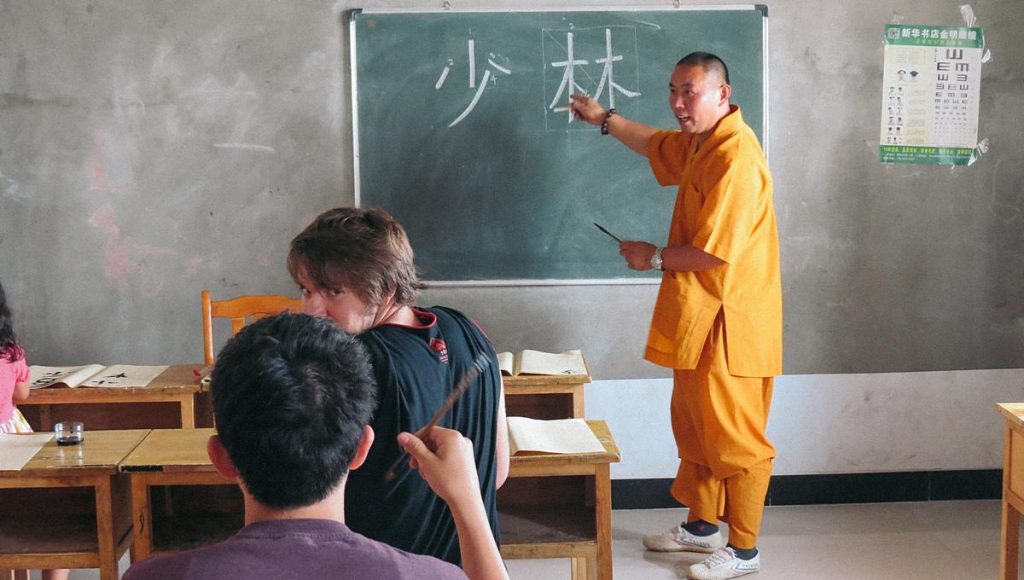
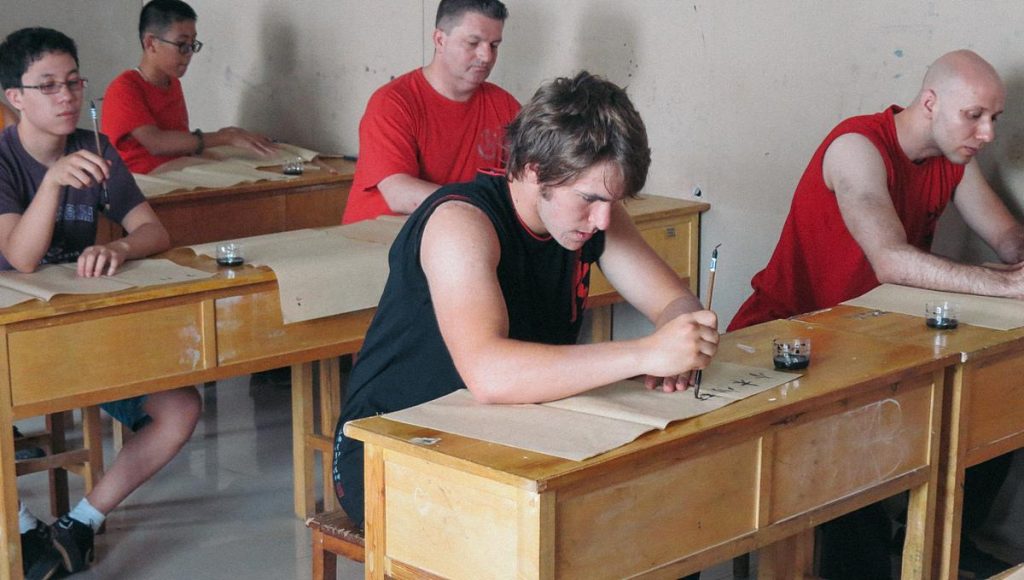
At the school of kung fu master Shi Yanchen, Chinese language (Mandarin) and calligraphy classes are now available daily for a reasonable fee.
How will you learn Chinese (Mandarin)
Our training programs from scratch are based on immersion techniques. The undeniable advantage compared to the Chinese language courses in your city is that you have the opportunity to practice speaking, communicating with native speakers every day, and this contributes to rapid progress.
Learn a living language and apply it immediately. You will learn all the nuances and subtleties of different dialects, learn to apply the key to understand you and the peasants, and educated businessmen.
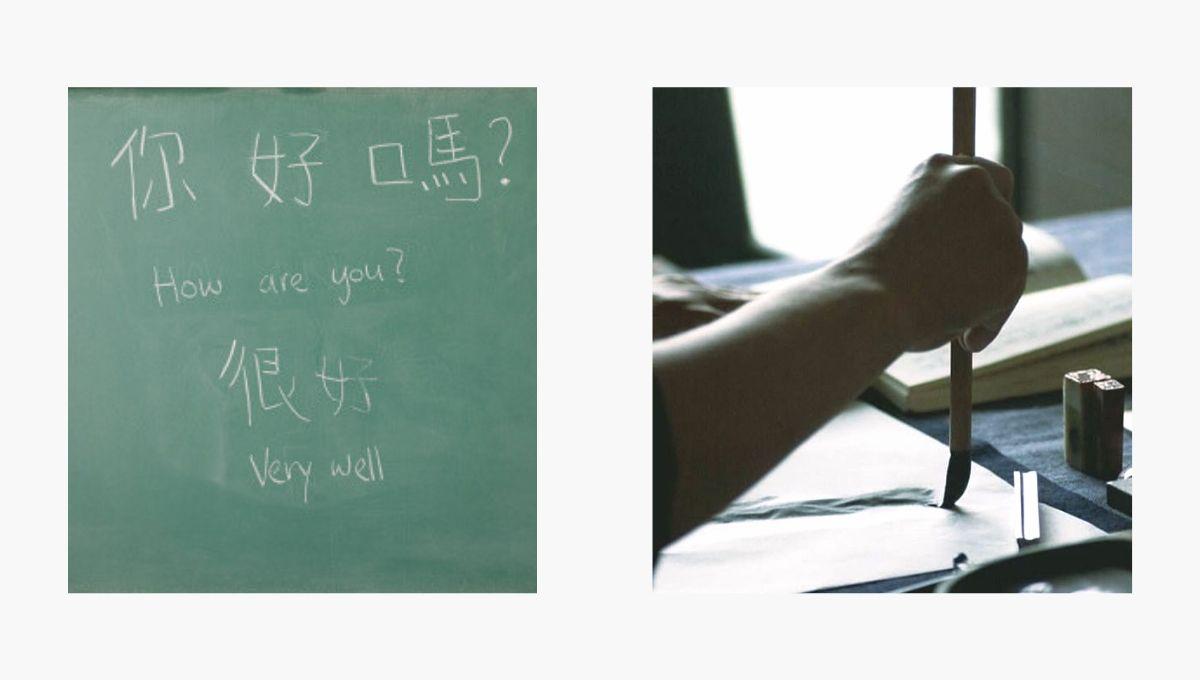
Chinese lessons for beginners combine all aspects of the language:
- reading
- writing (simplified characters and Pinyin)
- talk
- audition
- grammar
- phonetics
You study society, history, culture and talk on everyday topics with native speakers. Accelerated learning methods allow even absolute beginners to start communicating on everyday topics in just a couple of weeks.
Calligraphy and kung fu. Communication — in motion
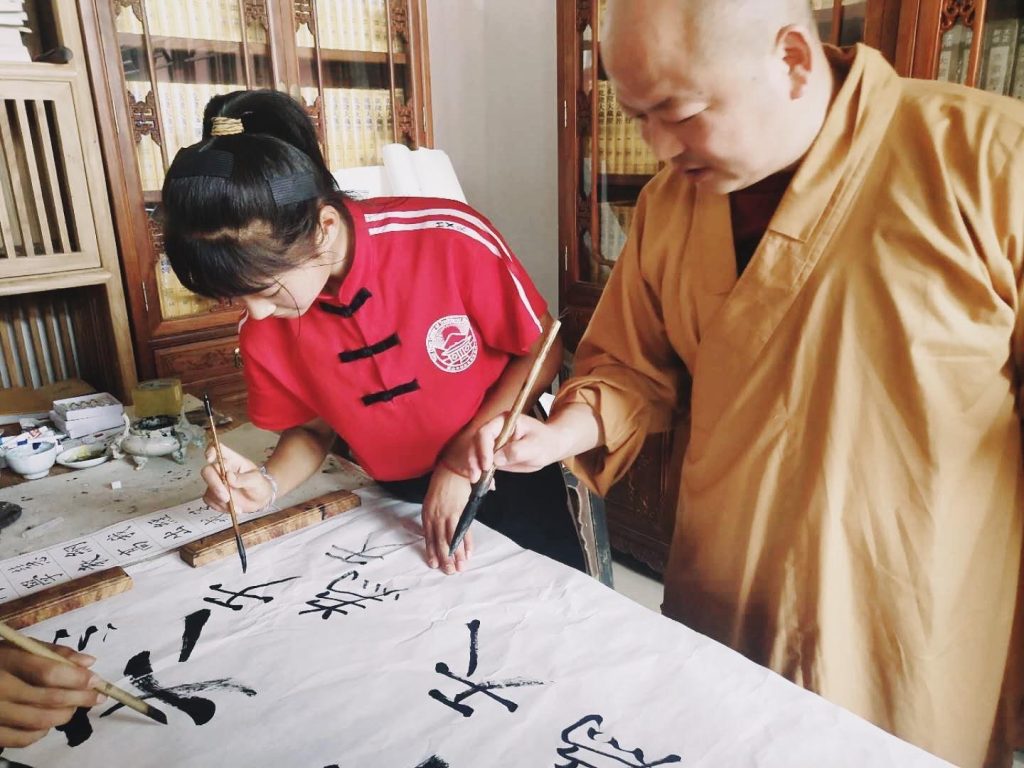
Calligraphy is the ancient art of depicting words. The first calligraphers were ancient people who left drawings on the walls of caves, but only in the East the images of words with hieroglyphs reached perfection and turned into art.
Rhythm is what unites wushu and calligraphy. Hieroglyphs, like forms of movement (taolu), require clarity of lines, balance, and the relationship of movement and statics. Energy “qi” moves freely within the body and flows smoothly through the master’s brush into the smooth lines of the character.
Learning calligraphy is an important element in mastering kung fu.
Calligraphy can be practiced with any level of knowledge of the Chinese language. A lot of time is initially given to the choice of brush, mascara density and work on the basic features. And if you want to progress in skill, you will have to seriously study both the history and culture of China, for example, to understand at a deep level the rhythms of emptiness and fullness, the terms “Tao” (道, dào), “qi” (气, qì). After all, even the point in calligraphy is a complex composition, and its application does not tolerate fuss.
In the school of master Shi Yanchen these lessons are given a mandatory important time, they are akin to meditation, and are of deep importance for the development of kung fu.


What to bring? T-shirt ok? or need the uniform day 1 )
I appreciate your honesty here. You don’t need to be perfect, you just need to be present. Let us know if you have any other questions.
age limit? 40 too late to start kicking stuff? hope not.
This is a very common feeling, don’t worry. The most important step is simply showing up to class. Keep going, you’re doing great.
Beginner friendly? or will i get beat up? be honest haha
You are asking the right questions. Everyone starts somewhere! Our beginner classes are designed exactly for you. Looking forward to training with you.
Seminars are long. 4 hours? do we get a lunch break? hangry is not a good state for kung fu.
Thank you for sharing your thoughts! Our doors are always open if you want to try a session in person. Hope to see you on the mats soon!
Trial class free? gotta try before i buy. standard procedure.
Hello! That’s actually a great point. It might feel difficult now, but consistency brings amazing results. Warmly, the Team.
age limit? 40 too late to start kicking stuff? hope not.
You are asking the right questions. It might feel difficult now, but consistency brings amazing results. Best regards on your path.