
Application of traditional shaolin kungfu
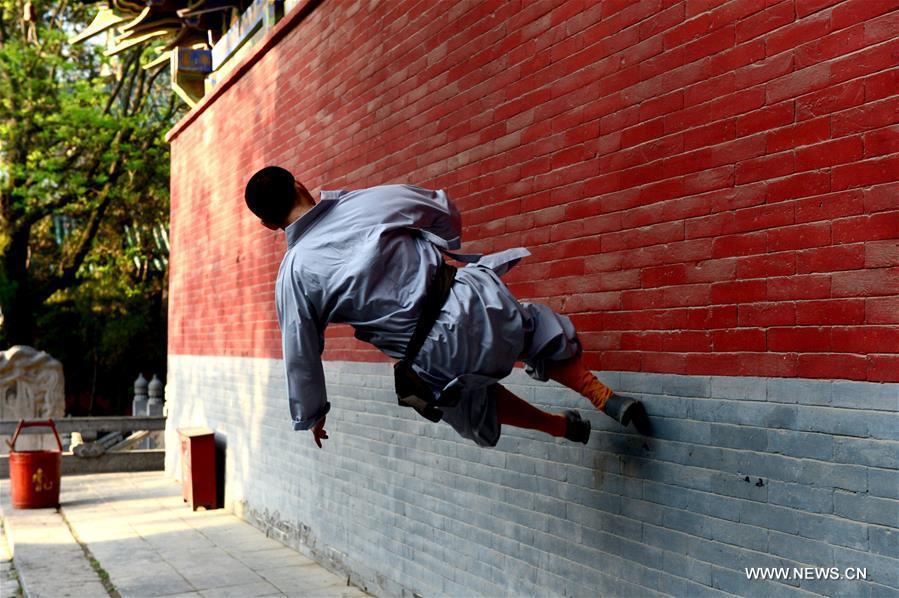
98% of people have an idea of kung fu based on films or the Shaolin show, but this is only an external, staged picture that has little in common with the real possibilities of this martial art.
Kung Fu is not a sport of the highest achievements, it is not a sport in the traditional sense. The concepts of “master of sports”, for example, in boxing and “master of kung fu,” have a different meaning. A kung fu master teaches to love an opponent, a master of sports in boxing calls for aggression in a duel.
Kung fu is not used at all for power, contact struggles, its task is to strengthen the body and spirit, give health and strength to practice and comprehend Wushu philosophy, to continue the tradition of knowledge transfer.
If you choose kung fu to be able to fight well, look for a better way to learn self-defense.
Fighting for a Wushu practitioner is not a way to show their superiority or gain a spectacular victory. In ordinary life, a fighter in a real fight can only be seen if there is a question of life and death, and an active reflection of the attack for him is the only way to restore the balance of good and evil in the world.
A kung fu master can concede in the ring, not being ready for sports rules and restrictions, but will not lose in a real fight, where he is guided by internal forces, he reflects the blow before the opponent tries to deliver it. In battle, he behaves strictly according to the situation and will never do more harm than is necessary to restore the balance of yin and yang.
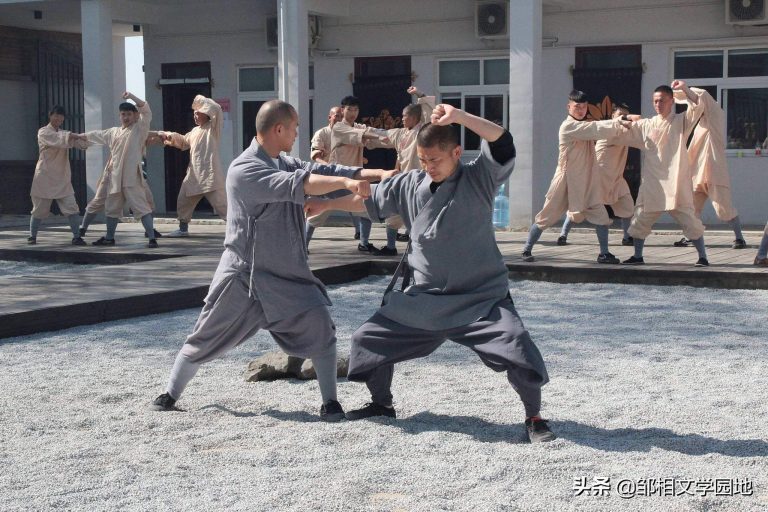
In traditional Shaolin schools, physical victory over an adversary is never set as the goal of training; there are no elements of a spectacular duel. Practiced a lot of things that seem completely unsuitable for self-defense. Internal development takes time, in contrast to external forms, which, if necessary, train for several months.
The nature of Wushu — four components
It is believed that education can be considered traditional if the school certainly focuses on its four mandatory components. During the training, the importance of each aspect is explained, gradually the student himself comes to answers to his questions about the purpose of the classes and the use of Wushu.
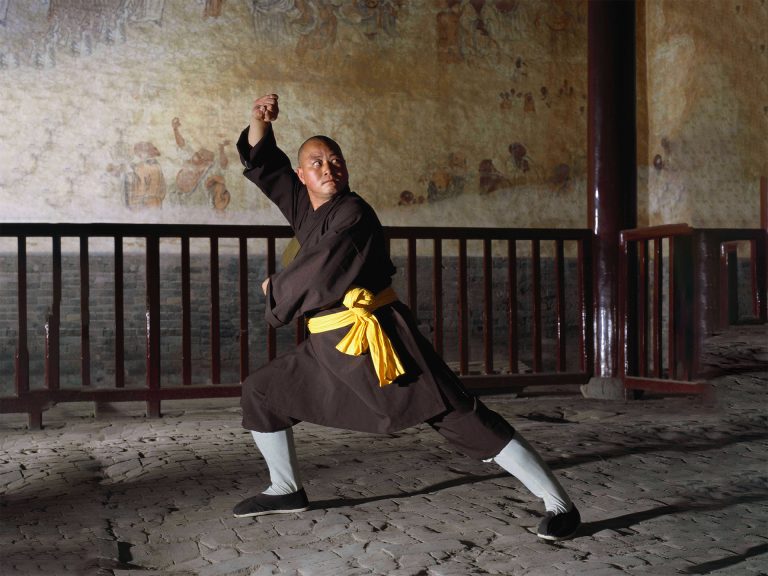
- The external form is the “body” of kung fu. These are racks, formal techniques (taolu) and combinations from which the characteristic styles of Wushu are composed. The visible side, which is often mistaken for the main one.
- Mastery and power, guided by the internal energy of qi. Success depends both on the technical level of development, and on the ability to accumulate and accurately direct internal power to the right place at the right speed.
- Use in battle . Kung fu is a martial art that saved hundreds of thousands of lives in its history, overthrew dynasties and brought new ones to power, kept pirates and robbers at bay, and had a huge impact on the training of Chinese army soldiers in the 15-16 century, tactics and strategy of the military operations. Each technique, each movement has been honed for centuries to achieve maximum effectiveness in battle.
- Kung Fu Philosophy . Each action is born as an internal impulse as a result of the fusion of three sources: spirit, qi energy, physical strength.
Why Shaolin Kung Fu is needed in everyday life
Exercises are structured so that with the correct technique for their implementation:
- internal energy clamps are removed
- posture improves
- joints become mobile, tendons become elastic
- lungs open, airflow not interrupted
- Qi flows freely
All problems of the physical condition of the body arise due to malnutrition, an unhealthy lifestyle, complex relationships in society, stress and aggression.
By practicing kung fu, you gradually restore all aspects of mental and physical health, the inner world is changing for the better.
You will forget about colds, joint pain, depression and neurosis, restore your appetite and a healthy sleep. The body will learn to heal itself.
You will gain clarity of thought, sharpness of perception and peace of mind, you will be able with a calm mind to correctly evaluate any non-standard life situation, accept it or emerge victorious.
Nice post. Short. To the point. like it.
Hello! That’s actually a great point. Our doors are always open if you want to try a session in person. You’re welcome to join our next seminar to explore this deeper.
Been following this blog for a while. good stuff mostly.
Hello! That’s actually a great point. We’d love to help you work on this specifically in class. Best regards on your path.
More videos pls! text is hard to visualize moves.
Thanks for asking! Our doors are always open if you want to try a session in person. Feel free to drop by for a trial class anytime.
Nice post. Short. To the point. like it
Thanks for asking! Training is a journey, and everyone moves at their own pace. Warmly, the Team.
Interesting take. Not sure I agree 100% but… makes you think.
You are asking the right questions. Our community is very supportive of beginners. Keep going, you’re doing great.
Thanks for sharing. saved to bookmarks (which i never open again usually lol).
Thank you for sharing your thoughts! You don’t need to be perfect, you just need to be present. Keep going, you’re doing great.
Interesting take. Not sure I agree 100% but… makes you think. lol
Thank you for sharing your thoughts! You don’t need to be perfect, you just need to be present. Warmly, the Team.
Typo in the second paragraph… just saying. grammar nazi here sorry!
This is a very common feeling, don’t worry. Master Shi Yanchen always says that patience is the first skill to learn. Let us know if you have any other questions.
More videos pls! text is hard to visualize moves.
You are asking the right questions. It might feel difficult now, but consistency brings amazing results. You’re welcome to join our next seminar to explore this deeper.
Thanks for asking! The most important step is simply showing up to class. You’re welcome to join our next seminar to explore this deeper.