
Start training Shaolin Kung Fu in Dengfeng
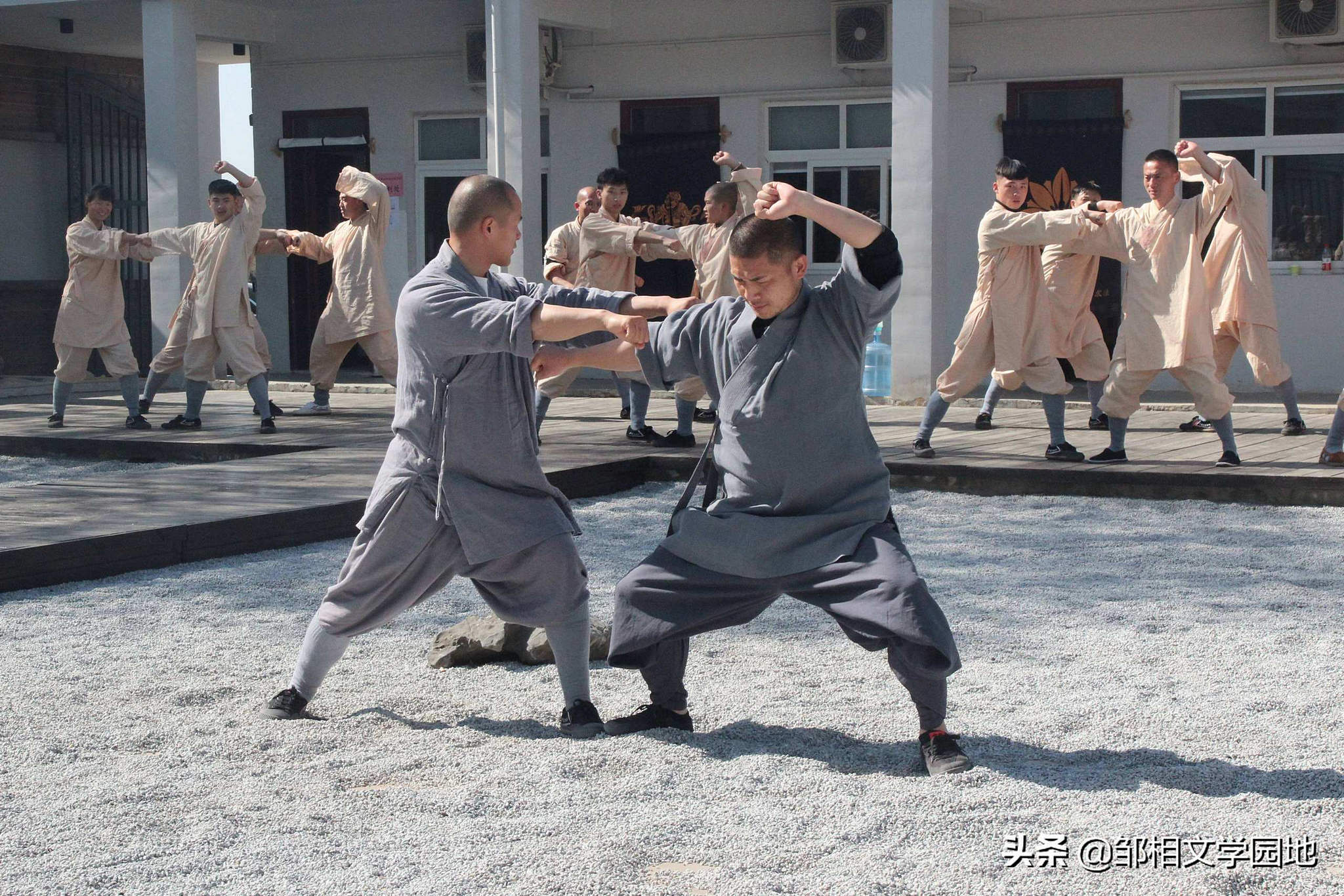
You have decided that kung fu classes in Shaolin — what you need? Your path lies in Dengfeng.
The town of Dengfeng (登封, dēngfēng) is located in the Central part of China, in Henan province and lies at the foot of one of the five sacred mountains of China — Songshan (嵩山; sōngshān), on its southern side.
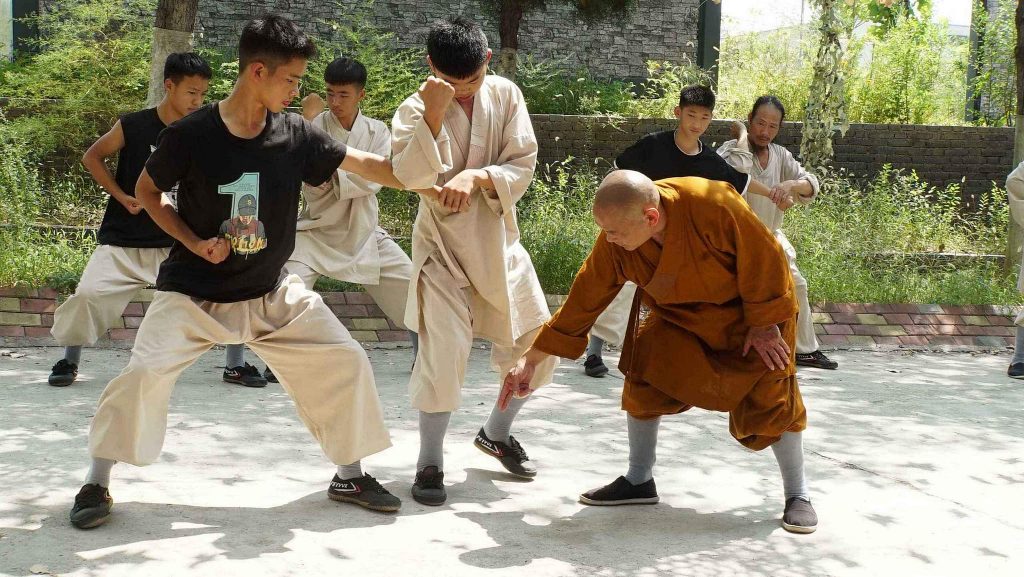
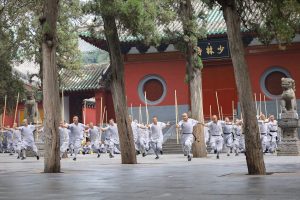
The city has a population of about 600,000, of which about 60,000 are enrolled in kung fu in numerous schools and academies. It’s statistical. But in the morning, when students go for a run, it begins to seem that in this city are engaged in Wushu literally everything. It is incredibly motivating and energizing.
School’s of Shaolin kung fu in Dengfeng
Currently Dengfeng there are about hundreds of schools, which position themselves as successors of the transfer of knowledge and skills of the Shaolin monks. Each of them claims that her training of kung fu in Dengfeng the most correct and authentic. In General, this is the way it is, you are on the land of the Great Shaolin, the only difference is in the details that can be essential.
The largest single martial arts school Shaolin — Tagou, there are already more than 30,000 people, with other major schools: EPO, Xiaolong, in which about 10,000 students. Then there is a number of institutions of varying degrees of equipment and fame, which simultaneously practice from 500 to 1000 people, and a dozen small schools, in which about 100 students.
In May 2019, the Henan provincial government decided to separate traditional schools and Wushu training schools. Each school can no longer remain independent in its own small way.
Under the new rules, a Traditional Kung Fu school must join a public school with a sports section, such as Tagou, so that the number of students exceeds 800. The second option is to merge several small schools into one large school so that the total number of students is over 800. The third option is to leave Dengfeng City. We chose the last one.
Large academies are powerful, regulated industries, with a clear regime and strict uniform requirements. In the first place team work, training in large groups under the guidance of a senior student or coach, not a master. Master is in the classroom as rarely as the Director of the educational complex in the office of first-graders.
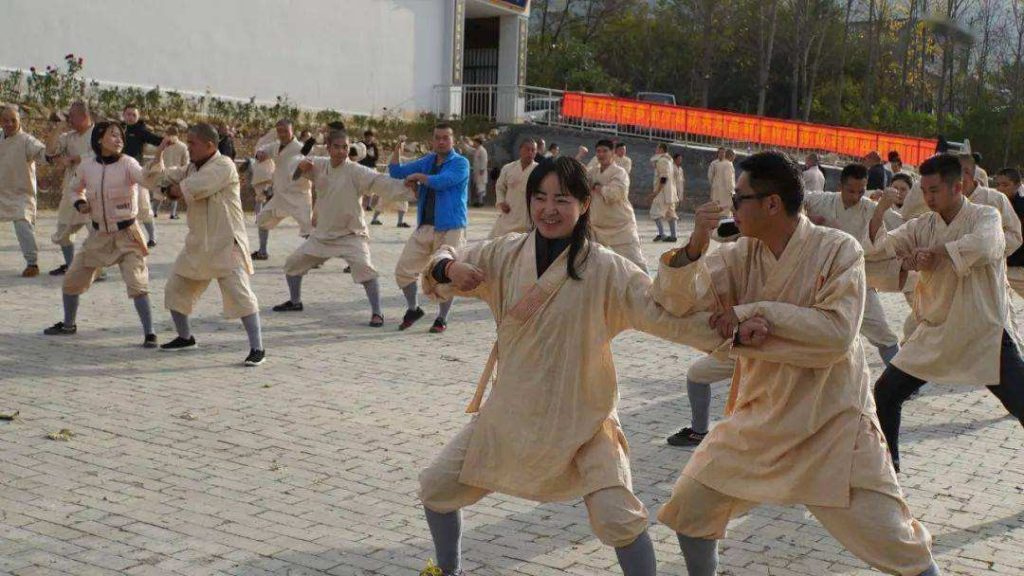
Training in large sports clubs is put on stream, from here come out good masters of sports wushu, instructors of sports centers, bodyguards.Inner work with qi and meditation is minimal, calligraphy and Chinese classes are extra charge. It is possible to get a certificate with the famous logo, which in itself is a guarantee of quality. Any Wushu school in Dengfeng treats its reputation very carefully.
What to do in Dengfeng in your free time
Come and join kung fu in Dengfeng in place, where this amazing art was born.
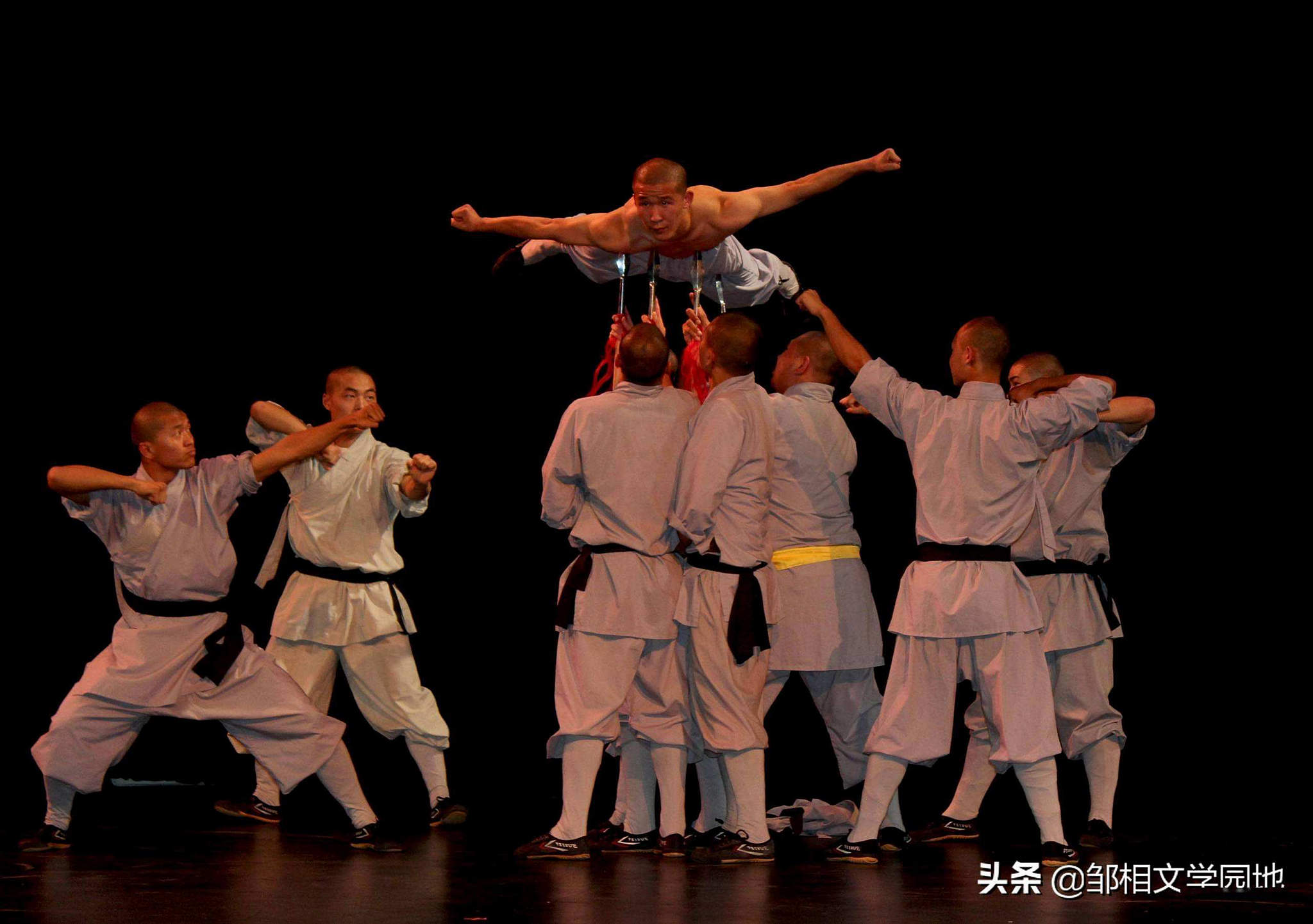
And in your spare time (there is always a day for rest and recreation in your schedule), it is interesting to travel around the area. There are many ancient settlements, ruined temples, sacred places and priceless historical sites in the area.Picturesque mountains, powerful waterfalls, archaeological sites, art galleries.
In addition, nearby Denfeng is the world famous gaocheng Observatory, Fawang temple, the temple of the Central peak of Songshan and the oldest in China brick pagoda Songyue.
And in the evening comes alive in the city centre, and begins to look like a vibrant Chinatown in any country of the world: bright lanterns, neon lights, delicious smells.
Keep it up. consistency is key right
Thanks for asking! We’d love to help you work on this specifically in class. Keep going, you’re doing great.
Nice post. Short. To the point. like it
Thanks for asking! Training is a journey, and everyone moves at their own pace. Warmly, the Team.
Со скольки лет можно заниматься в вашей школе и необходимо ли знание китайского? Заниматься могут только парни или и девушки тоже?
Здравствуйте
В нашей школе боевых искусств занятия доступны для детей с 6 лет. Знание китайского языка не является обязательным, так как тренировки кунг-фу больше основаны на языке тела и погружении в атмосферу. Заниматься могут как парни, так и девушки — мы приветствуем всех, кто хочет изучать боевые искусства и укреплять дух и тело.
Если у вас есть дополнительные вопросы, пожалуйста, дайте знать!
Thank you for sharing your thoughts! We focus a lot on correct structure so you can progress safely. Hope to see you on the mats soon!
Interesting take. Not sure I agree 100% but… makes you think. …
I appreciate your honesty here. It might feel difficult now, but consistency brings amazing results. Hope to see you on the mats soon!